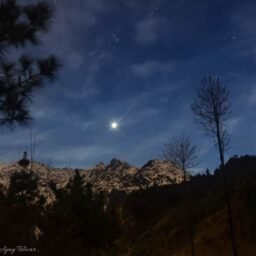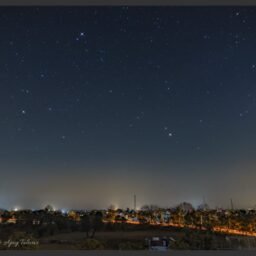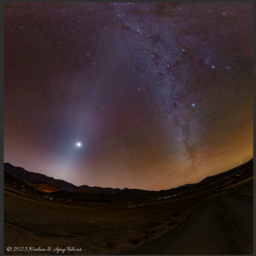

On Tuesday, 3rd March 2026, the Sun, Earth and the Moon lined up in a straight line and the Moon traversed through the Earth’s shadow for a few hours. A Total Lunar Eclipse occurred. The Moon passed through the lighter penumbra and the darker umbra of the Earth’s shadow to turn completely red for approximately an hour. The middle portion of the Eclipse was timed to be overhead the Pacific Ocean, eastern Asia, Australia.
Lunar Eclipse was Partial in India
By the time the Moon rose in India the middle time of the eclipse had passed, and only the partial and penumbral portions of the eclipse were left to be seen. The eastern regions of India would see more umbral and partial phases than western India. We decided to travel a few hundred kilometres eastwards from Gurgaon to increase the percentage of the partial phase seen. We also decided to go high on a vantage point to see the eclipse clearly. We decided for Naina Peak, the highest point in Nainital.
Naina Peak
The three-kilometre trek up to the Naina Peak is quite steep. It takes about 90 minutes to walk up to Naina Peak from Taanki Bend, but as they say ‘The best view is after the hardest climb’, and it is entirely true. The climb is quite strenuous physically but there is an inspirational mental reward waiting at the top.
Vantage Point
There is a definite psychological feeling of vastness and sense of joy, when you are standing on a vantage point. On reaching the Naina Peak, peaks that appeared intimidating from the base now seem undulating waves cloaked in mist and sunlight. Towards the south in the valley, you can see the kidney bean shape Naini Tal, and towards the north you can see the snow-capped Himalayan peaks. This panoramic vista evokes a mix of quiet wonder and intense joy.
Awaiting the Eclipse
The geometry of a Lunar Eclipse is special. You the observer, right in the middle of the line joining the Sun and the Moon. As the sun went down steadily in the west, our location of Naina Peak cast a shadow on the mountain faces below. We could almost imagine our own shadow just above the obtuse angle formed by Naina Peak.
Although it was below the horizon, and not visible yet, we knew that the location of Moon was coinciding with our shadow. Slowly our shadow and the shadow of Naina Peak got blurry near the horizon at the time of sunset. Golden Hour unfurls: a clear canvas of yellow, ochre, and deep crimson.
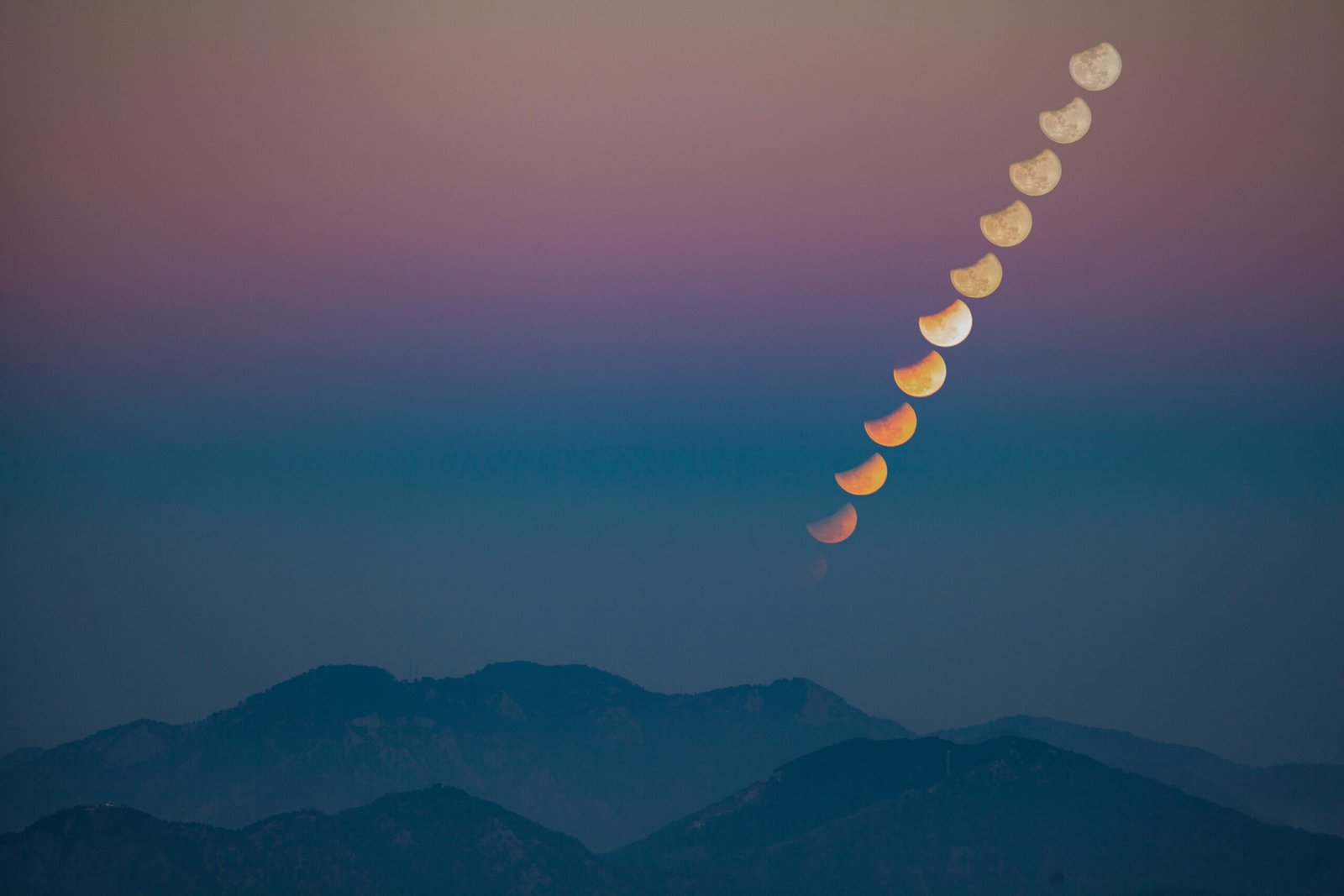
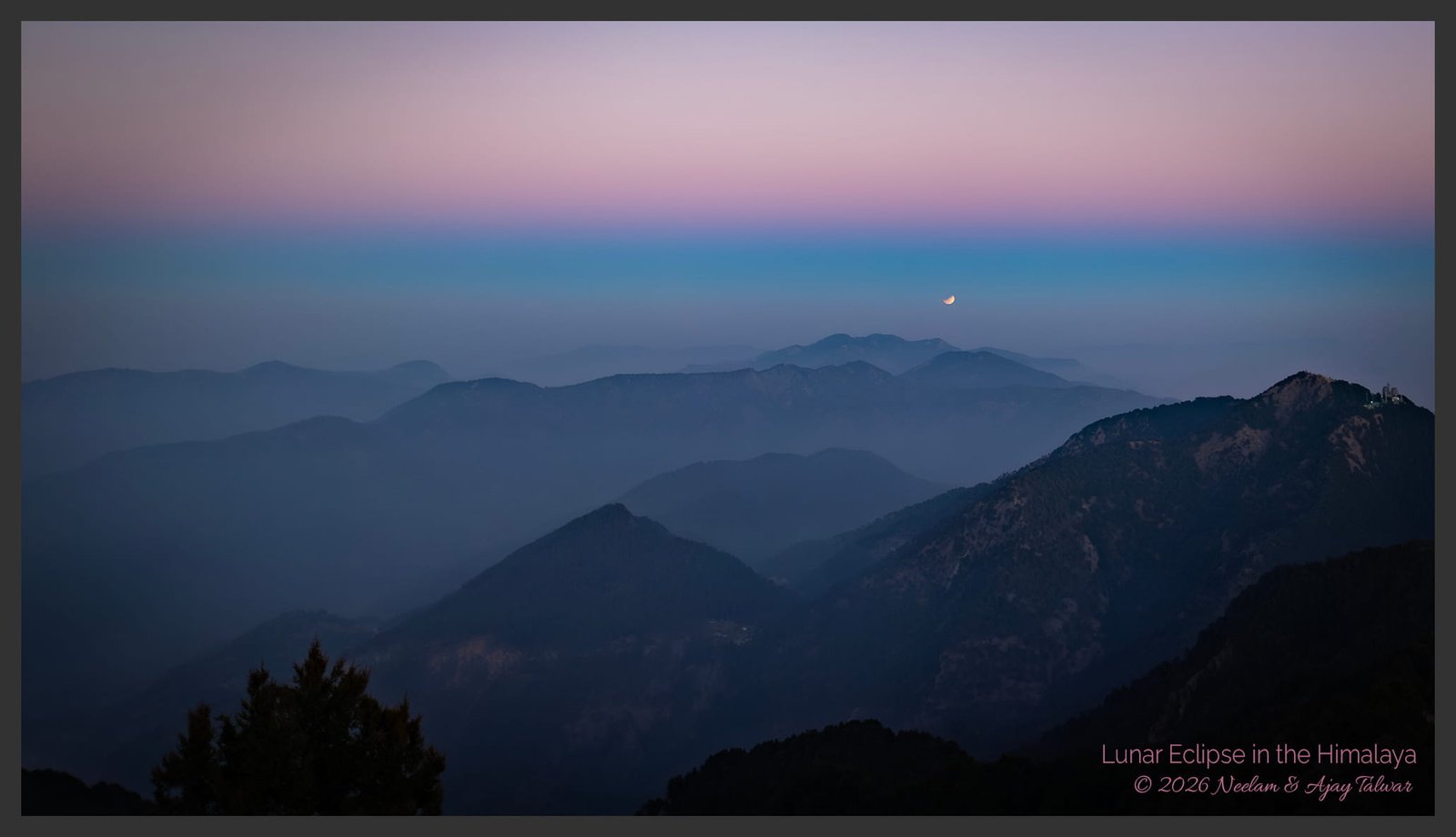
Above the horizon, the Belt of Venus appears—a soft, rosy arch of backscattered light. Now the changes were quicker. The Belt of Venus moved upwards, dissipating in the atmosphere, and them the grey shadow of Earth rose higher, parallel to the horizon. As the umbral portion of the Lunar Eclipse had already passed, the Moon drifting eastwards was in its partial phase and below the line of the shadow of Earth. {The short video at the bottom of this page aptly describes the scene visually}.
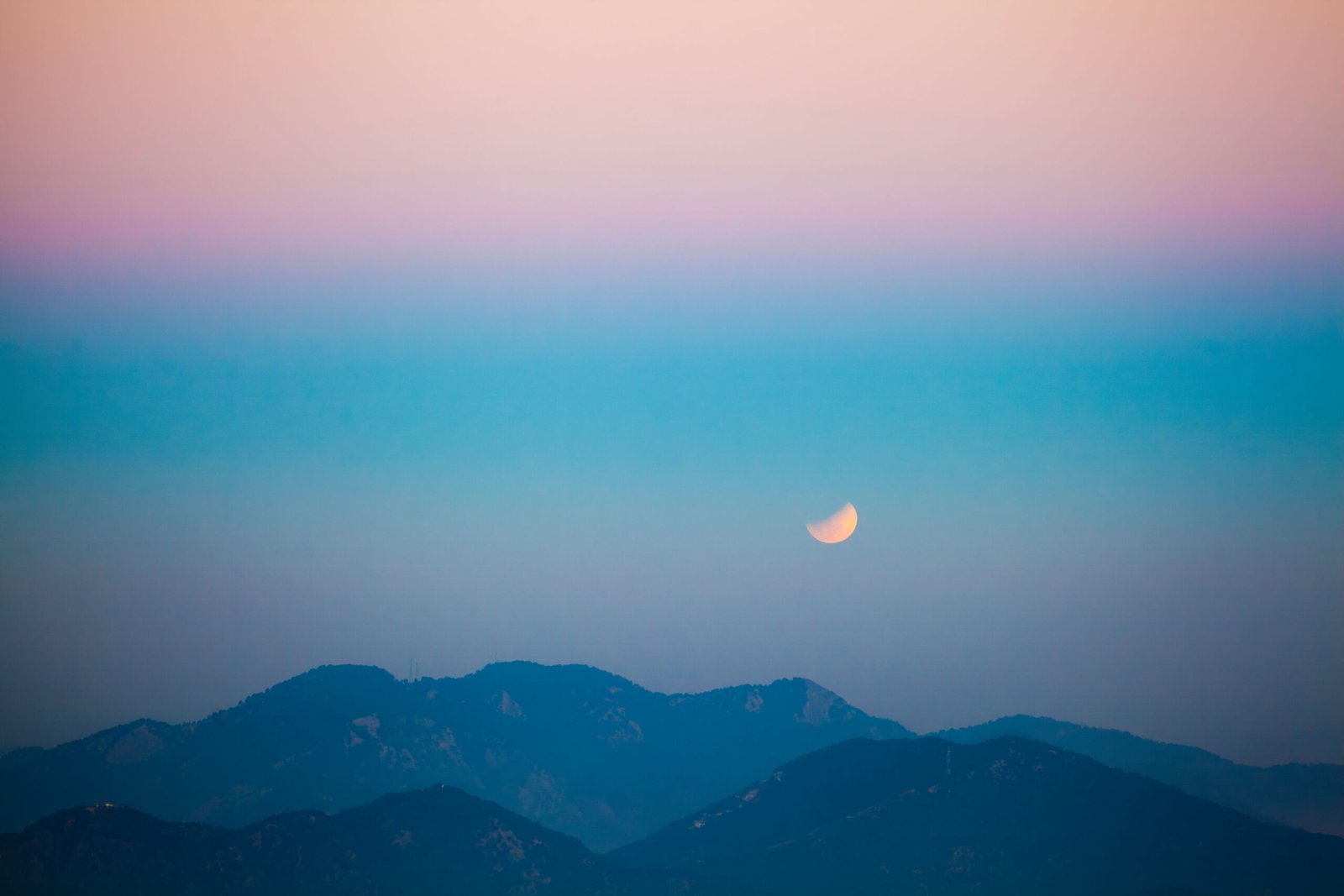
A pure sublime moment of enchantment, the partially eclipsed Moon emerges above the Himalayan peaks. The upper half of the Moon in the Earth’s shadow, and its lower curve glowing brighter in the penumbral part of the shadow.
A singular moment of magic, caught between the pink Belt of Venus and rising dark of the night. Standing on that vantage point, beholding an endless ever-changing vista, it was a realisation of being a part of the magnificent universe, and its sheer beauty.
As the eclipse waned, the dark veil of Earth’s shadow retreated from the Moon. Slowly, the moon recovered its wholeness, swelling into a luminous orb that hangs suspended over the Himalayan silence.
It was the Holi Moon—the Phalguna Purnima, radiating a brilliant, auspicious glow.
The plan ahead
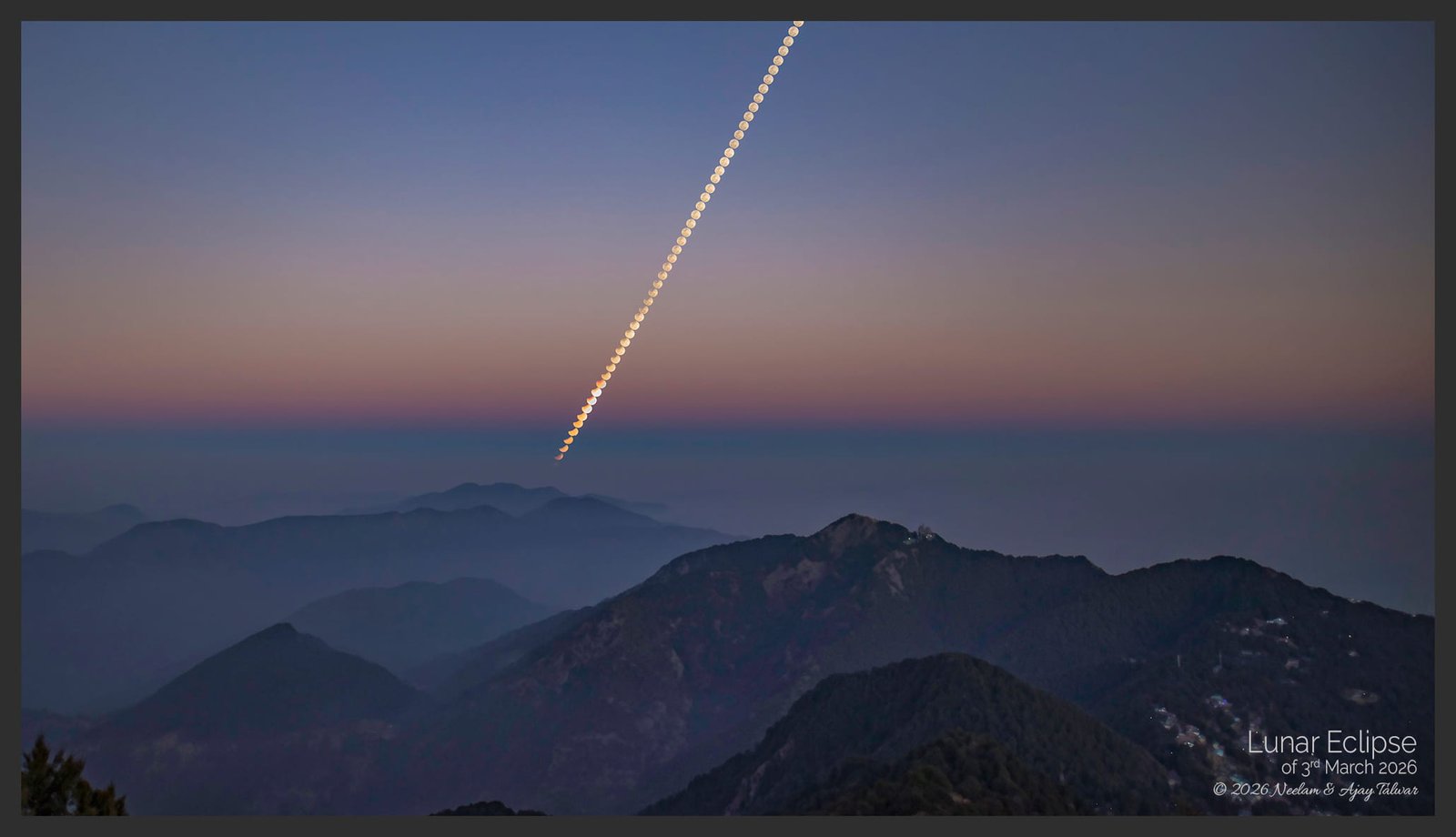
It will be our endeavour to shoot all the 13 full moons till February 2027, consistently at the same location. A duration of one year, which will include the Blue Moon of 31st May. Finally, we plan to merge all the rising moons of the entire year in a panoramic image showing the southernmost full moon near June Solstice, arching over the Naini Tal, and the northernmost full moon near December Solstice, rising steeply above the horizon.